Note: This post is meant to be read after reading part 1 of this series, where I lay some groundwork and introduce some important concepts. I would also advise reading the other preceding parts, but this is not completely necessary.
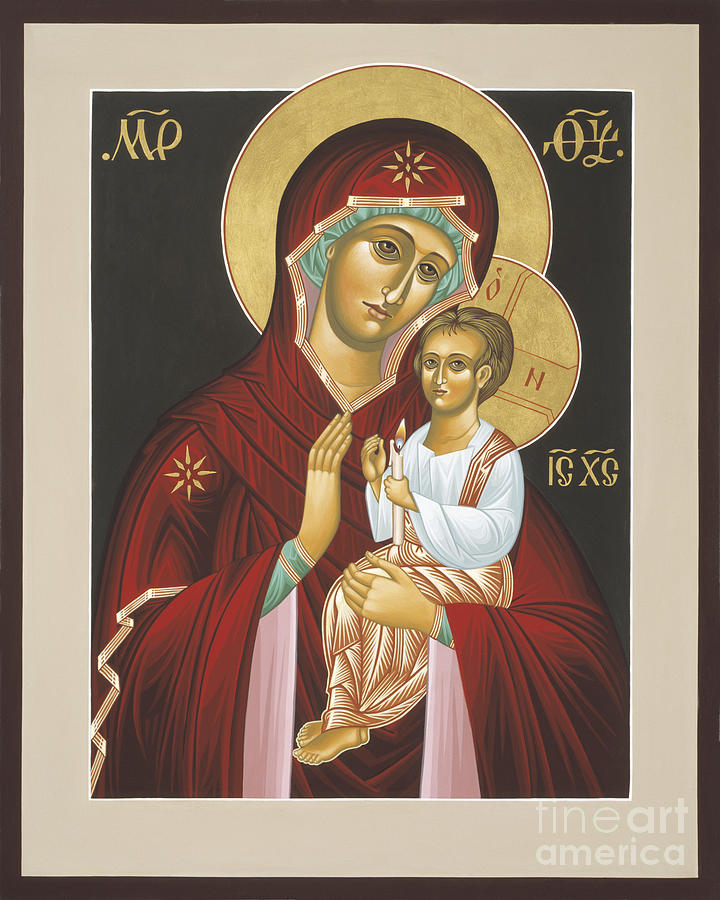
El Shaddai
A few days ago, Dr. Dan McClellan posted a video on his YouTube channel - the subject matter was the outrage amongst conservative Christians in America regarding a statement that James Talerico made saying that "God is nonbinary". And as always, Dan makes an excellent argument in his video demonstrating why Representative Talerico would say this. But in the comment section, I replied: "I would've said something about El Shaddai."
In Genesis 17, something strange happens - I am going to demonstrate by pointing out the terms used for God and replacing the English translations of these terms with the original Hebrew terms for God (pay attention especially to the first 3 verses):
When Abram was ninety-nine years old, [YHWH] appeared to Abram and said to him, “I am [El Shaddai]; walk before me, and be blameless. 2 And I will make my covenant between me and you and will make you exceedingly numerous.” 3 Then Abram fell on his face, and [Elohim] said to him, 4 “As for me, this is my covenant with you: You shall be the ancestor of a multitude of nations. 5 No longer shall your name be Abram, but your name shall be Abraham, for I have made you the ancestor of a multitude of nations. 6 I will make you exceedingly fruitful, and I will make nations of you, and kings shall come from you. 7 I will establish my covenant between me and you and your offspring after you throughout their generations, for an everlasting covenant, to be [Elohim] to you and to your offspring after you. 8 And I will give to you and to your offspring after you the land where you are now an alien, all the land of Canaan, for a perpetual holding, and I will be their [Elohim].”
Now you may have noticed, with my help, that in the first 3 verses of this passage, the terminology for God changes 3 times. Recall my discussion in part 1 of this series about Source Criticism, and the various hypothesis involving different sources being compiled to make up the Pentateuch (as well as other books in the Hebrew Bible). That is likely a bit of what is going on here.
But let's talk about that name: El Shaddai. Many English Bibles will render that "God Almighty" - this is because some scholars have suggested that the name comes from the Hebrew word "shadad", which means "to violently destroy." But I think that a more likely translation is "the breasted God". Let me explain: shad is the Hebrew word for "breast", and you can find this word in a number of places, such as Job 3:12, Psalm 22:9, Song of Solomon 1:13, and there are many other references (some of which I will cover in this post). And adding ai to the end renders it in the plural possessive - making it literally "my breasts". So one way to translate el shaddai would be to literally translate it "the divine power of my breasts". But some scholars have suggested things like "the Breasted God" or simply "Mother" as ways to render this name in English.
While the translation of the name is contested, note that both the Theological Dictionary of the Old Testament (TDOT) and the New International Dictionary of Old Testament Theology and Exegesis (NIDOTTE) recognize that the name Shaddai comes from the word shad (שַׁד) which means "breast" or "mountain". Although TDOT concludes that "God of the mountain" is the best translation, the fact that it recognizes "the God of Breasts" as a possibility is significant. TDOT notes that shaddai follows a common pattern for divine name formation using a “natural element plus an adjectival suffix. One thinks of Artsay, Tallay, and Pidray, wives of Ba`al whose names mean 'One of the Earth,' 'The Dewy One,' and 'the Misty One'" (TDOT, I:256). Following this convention, Shaddai would mean "The Breasted One".
And it should be noted that this name consistently appears in the Bible alongside fertility blessings, and that this convention is exclusive in Genesis. Note how the entire chapter of Genesis 17 is about an old man and woman who are supposed to be infertile being given a fertility blessing. Later on in Genesis 28:3, Isaac pronounces the following blessing on Jacob:
May [El Shaddai] bless you and make you fruitful and numerous, that you may become a company of peoples.
And examine Genesis 35:11:
[Elohim] said to him, “I am [El Shaddai]: be fruitful and multiply; a nation and a company of nations shall come from you, and kings shall spring from you.
Likewise, if we turn to Genesis 49:25, this is part of a blessing that Jacob pronounced on his sons:
[B]y the God [El] of your father, who will help you,
by [El Shaddai] who will bless you
with blessings of heaven above,
blessings of the deep that lies beneath,
blessings of the breasts [shaddayim] and of the womb.
In the story of Joseph, Jacob says the following to Joseph in Genesis 48:3-4:
"[El Shaddai] appeared to me at Luz in the land of Canaan, and he blessed me and said to me, ‘I am going to make you fruitful and increase your numbers; I will make of you a company of peoples and will give this land to your offspring after you for a perpetual holding.’"
Note how in all of these cases, the name El Shaddai accompanies the idea of being fruitful and having numerous descendents.
Additionally, Isaiah 60:16 starts with the metaphor of suckling breasts before using this name, and Job 33:4 uses this name to speak of giving life.
 |
| Charity, by William-Adolphe Bouguereau, 1878 |
So while one can point to Exodus 6:3 to say that this is just another name for YHWH, I think that this was another god entirely - a fertility goddess, to be exact. And even if we agree that "this is just another name for YHWH", that would make YHWH non-binary. And this idea is further strengthened when Job tries to conflate YHWH and El Shaddai and has YHWH talking about his womb in Job 38:29.
And while this has nothing to do with El Shaddai directly, in Luke 13:34, Jesus uses feminine, motherly imagery when he says "how often have I desired to gather your children together as a hen gathers her brood under her wings...."
Additionally, as Amy Jill-Levine and Douglas McKnight point out in "The Meaning of the Bible":
[T]he Spirit is grammatically feminine in Hebrew and Aramaic, although grammatically neuter in Greek.
I also find it quite interesting that the Hebrew word racham - which can mean "compassion" or "womb" - is used quite often to speak of God's compassion or mercy (see here). Jesus uses a Greek translation of this word in Luke 6:36, when he commands his followers to "be compassionate/merciful, just as your Father is compassionate/merciful." One wonders, given the etymology, if perhaps he might have used "Mother" here, were it not for the patriarchal society he was in.
Rodger Kamenetz notes in "The Jew in the Lotus":
Before reading the Torah, Jews pray to “Av Harakhamim,” the “Merciful Father.” The root of rakhamim, or mercy, is rekhem - womb. Av Harakhamim could be translated, our Wombly Father, our Motherly Father.
This word for "compassion" is highly suggestive - it suggests that God's love is like the unconditional love a mother has for the baby in her womb. She nurtures this life with her own life, and carries it with her wherever she goes. She feels its every hiccup and twitch with great excitement. Even the English form of this word helps us to understand this, as it literally means "to feel with" - we are called by Jesus to feel with others, and to nurture them with a womb-like love.
In the most recent episode of the "Big Bang Theory" spinoff, "Georgie & Mandy's First Marriage", Mandy says something about God being a "She" on TV and this puts her job as a TV reporter in jeopardy, as people in her Texas community send her hate mail. But I wonder - if more people knew about the feminine side of God represented by El Shaddai and took seriously Jesus' imagery of God as a mother hen, would this challenge their misogyny?
I'm going to stop here, and the next post will cover another goddess, whose worship the Biblical writers tried to erase.


No comments:
Post a Comment